

An Overview of the Live Events Industry 2026
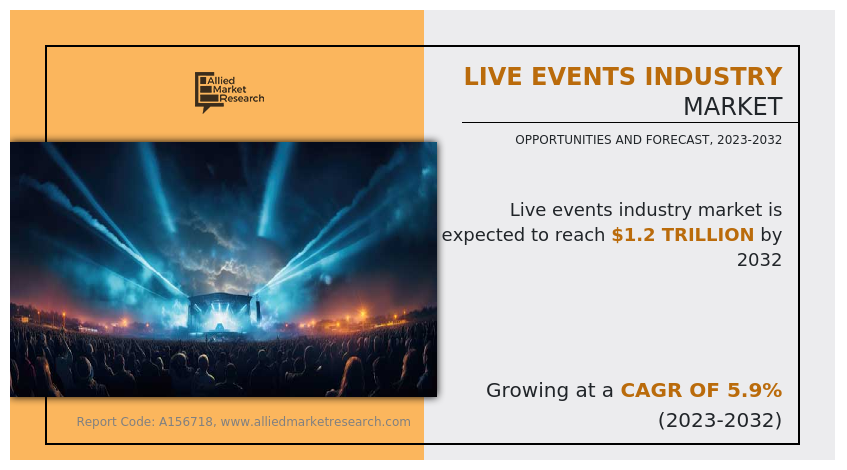
Live events industry Summary (2022 - 2032)
Rise in demand for in-person experiences, networking opportunities, and interactive brand engagement is driving the growth of the live events industry.
WILMINGTON, DE, UNITED STATES, June 8, 2026 /EINPresswire.com/ -- Live events industry is creating, planning, and organizing memorable live events. It includes concerts, festivals, conferences, trade shows, sporting events, exhibitions, corporate and personal gatherings, as well as cultural and social programs. These involve bringing people together at a single location to offer highly immersive and engaging experiences to the audiences.Huge amount of revenue is generated from live events through ticket sales, sponsorships, merchandising, hospitality, and tourism. Though the COVID-19 pandemic impacted the live events sector, it recovered rapidly and has been witnessing an exponential rise. In addition, organizations are popularizing brand visibility, networking, and audience engagement through live events. This is leading to increased expansion and evolution of the live events industry globally.
Request The Sample PDF Of This Report: https://www.alliedmarketresearch.com/request-sample/157202
Applications and End Users
Live events play an important role across corporate, entertainment, education, sports, government, cultural, and social sectors. Businesses use events for product launches, conferences, trade shows, annual meetings, and employee engagement activities. Educational institutions organize seminars, workshops, academic conferences, and graduation ceremonies, while the entertainment sector hosts concerts, festivals, theater performances, and award shows. Sports organizations conduct tournaments, leagues, and fan engagement events. Governments and non-profit organizations use live events for public awareness campaigns, fundraising activities, community programs, and official ceremonies. The industry also supports personal and cultural occasions such as weddings and private celebrations.
The industry serves a wide range of end users, including businesses, event organizers, exhibitors, sponsors, educational institutions, government agencies, sports organizations, and individual attendees. Companies rely on live events to promote brands, launch products, generate leads, and build business relationships. Professionals attend conferences and exhibitions to gain industry knowledge and expand their networks. Educational institutions use events to encourage learning and collaboration, while sports and entertainment organizations engage audiences and generate revenue. Governments and NGOs use events to communicate messages and support social causes.
Drivers and Opportunities in the Live Events Industry
Rise in demand for in-person experiences, networking opportunities, and interactive brand engagement is driving the growth of the live events industry. Companies use events to promote products, connect with customers, and strengthen business relationships, while consumers increasingly seek entertainment and cultural experiences. Improvements in live streaming, event management software, mobile applications, and digital tools have enhanced event planning and audience participation. Hybrid events have expanded he overall reach of live events by allowing both physical and virtual attendance.
The live events industry offers several growth opportunities. Technologies such as virtual reality (VR), augmented reality (AR), and interactive platforms are improving attendee experiences and accessibility. Sustainability is also becoming a focus area, with organizers adopting environmentally responsible practices and reducing event-related waste.
Growth in business travel, international exhibitions, concerts, festivals, and sporting events continues to create demand. Emerging economies present additional opportunities due to better infrastructure, rising incomes, and expanding business activity. At the same time, virtual and hybrid event formats are helping organizers attract wider audiences and generate new sources of revenue through digital participation and sponsorships.
Use of AI in the Live Events Industry
Artificial Intelligence (AI) is being used by event organizers to simplify tasks such as registration, ticketing, scheduling, and attendee communication, which saves time and improves event management and coordination.
AI also helps create better experiences for attendees. Event apps can recommend sessions, exhibitors, and networking opportunities as per individual interests. Chatbots provide quick answers to common questions and assist visitors throughout the event.
In marketing, AI helps organizers understand audience preferences and target potential attendees more effectively. It can also support ticket pricing decisions by analyzing demand and purchasing trends.
AI is useful in virtual and hybrid events by enabling features such as live captions, language translation, and audience interaction tools. It also provides insights into attendee behavior and event performance.
Security is another area where AI is being used. Crowd monitoring and facial recognition technologies can help improve safety and manage large gatherings. In addition, AI supports sustainability efforts by improving resource use and reducing waste.
As technology advances, AI is expected to play a larger role in making live events more efficient, personalized, and accessible for both organizers and attendees.
LIMITED-TIME OFFER - Buy Now & Get Exclusive Discount on this Report@ https://www.alliedmarketresearch.com/checkout-final/72d73fbfddbe952087dfeeff4865da95
Future Trends in the Live Events Industry
The live events industry is expected to be shaped by in-person and virtual experiences in the future. Hybrid events are projected to remain popular because they allow organizers to reach larger and more diverse audiences. The growing popularity of digital event formats has expanded audience reach, improved accessibility, and created new opportunities for networking and engagement across industries.
Technologies such as AI, AR, and VR will continue to improve attendee engagement and make events more interactive.
Sustainability is also becoming increasingly important, with organizers focusing on reducing waste and adopting environmentally friendly practices. Better event management platforms and mobile apps will help improve communication, networking, and overall event experiences.
At the same time, growing demand for unique and personalized experiences will encourage innovation across the industry. As technology advances and audience expectations change, live events are expected to become more accessible, engaging, and efficient, creating new opportunities for organizers and participants alike.
Challenges and Restraints in the Live Events Industry
The live events industry faces several challenges, including high costs for venues, equipment, staffing, security, and logistics. Economic downturns can reduce ticket sales and sponsorship spending, affecting event profitability. The industry is also vulnerable to disruptions such as extreme weather, health emergencies, and security threats, which can lead to cancellations or lower attendance.
Organizing large events requires coordination among many stakeholders, increasing the risk of operational and technical issues. Competition from digital entertainment platforms, regulatory requirements, and cybersecurity concerns in virtual and hybrid events add further pressure on organizers.
Inquiry Before Buying @ https://www.alliedmarketresearch.com/purchase-enquiry/157202
Conclusion
The live events industry plays an important role in business, entertainment, education, and sports. Growing demand for engaging experiences, along with advances in technology and hybrid event formats, continues to support industry growth. Although challenges remain, ongoing innovation is helping organizers improve event delivery, reach wider audiences, and create new opportunities. Numerous advancements are expected to make live events more accessible, environmentally sustainable, and inclusive to a diverse as well as wider range of global audience.
Short Description
The live events industry involves planning and managing events such as concerts, conferences, exhibitions, festivals, sporting events, and corporate gatherings. It brings together organizers, venues, sponsors, and service providers to deliver experiences that support entertainment, networking, marketing, and business growth.
Related Reports :
Saudi Arabia Events Industry
Corporate Luxury Events Market
Corporate Event Market https://www.alliedmarketresearch.com/corporate-event-market-A16261
Event marketing services market https://www.alliedmarketresearch.com/event-marketing-service-market-A107130
Virtual event industry Market https://www.alliedmarketresearch.com/virtual-events-industry-market-A06596
David Correa
Allied Market Research
+ + + + + + + + + + + + + +1 800-792-5285
email us here
Visit us on social media:
LinkedIn
Facebook
YouTube
X
Legal Disclaimer:
EIN Presswire provides this news content "as is" without warranty of any kind. We do not accept any responsibility or liability for the accuracy, content, images, videos, licenses, completeness, legality, or reliability of the information contained in this article. If you have any complaints or copyright issues related to this article, kindly contact the author above.
